Anniversary session prompts for a couple married 30 years
Nineteen prompts from the Prompted catalog for the couple who have not been photographed on purpose since their wedding, plus the poses that suit a long marriage and the ones to leave off the list.
A thirtieth anniversary session is not an engagement session with grey hair. The couple booking it have usually not been photographed together on purpose since their wedding, which means the last real portrait of the two of them is thirty years old, badly scanned, and hanging in a hallway. Something has prompted this one: an adult child paid for it, or somebody was ill last year, or they simply looked at the wall and realised there is nothing between that photograph and now. You will rarely be told which. What you can assume is that the booking took some deciding, and that at least one of them agreed to it rather than wanted it.
That changes what the hour is for. They are not trying to look like they are falling in love, and prompts built for that will land badly. What they have is thirty years of shared routine, which is a real thing to photograph and a much easier one to direct, because routine can be asked for directly and feelings cannot. Every prompt below is copied word for word from the Prompted catalog with the pose it belongs to, grouped the way the session tends to run. The reference images are AI-generated rather than frames from real sessions, and the couple in them is younger than your clients will be. Read them for the geometry — where the hands go, which way the shoulders turn — and not as a picture of the result. Real galleries are being added through the contributor program.
Ask one question before the session
In the booking email, ask what they do together on an ordinary Saturday. Not how they met, not what the secret is — what they actually do. The answers come back small and specific: they walk the same loop, they do the crossword, one of them drives and the other navigates badly. That list is your shot list. A couple photographed doing something they genuinely do stand differently from a couple placed in a field and told to be in love, and the difference is visible in the shoulders.
Ask one practical question alongside it: is there anything that hurts. Thirty years in, somebody usually has a knee, a hip, a shoulder that does not go all the way up any more. Knowing in advance means you never ask for the thing they would have to decline, and declining in front of a spouse is the part people mind.
There's no wrong way to do this. Stand close and I'll do the rest.
Nervous clientFrom the pose “Forehead lean home”
The first thing you say, before the first frame, while you are still walking them over. It sets the whole contract: there is no standard they are failing, and the technical part belongs to you. For a couple who have spent thirty years being the ones who know what they are doing, being told they cannot get this wrong is worth more than any compliment.
Whatever you did just then — that was perfect. Do it again.
Nervous clientFrom the pose “Slow dance”
Use it on the first accidental thing that happens: an eye-roll, a hand on a back, one of them straightening the other's collar. It rewards what they already do instead of replacing it, and it tells them the thing you want is not a pose they have to learn. Say it early enough that the rest of the hour runs on it.
Start standing, close, with the hands sorted
The first ten minutes decide the rest. Put them in a standing hold where the hands have a job, and the body stops asking you what to do with itself. A slow-dance position does this better than anything else in the catalog for this age of couple: feet planted, one hand clasped between the chests, the other on a shoulder or a waist, nobody balancing on anything. It is also a position most people who married in the nineties have physically been in before, which means you are asking them to repeat something rather than attempt something.
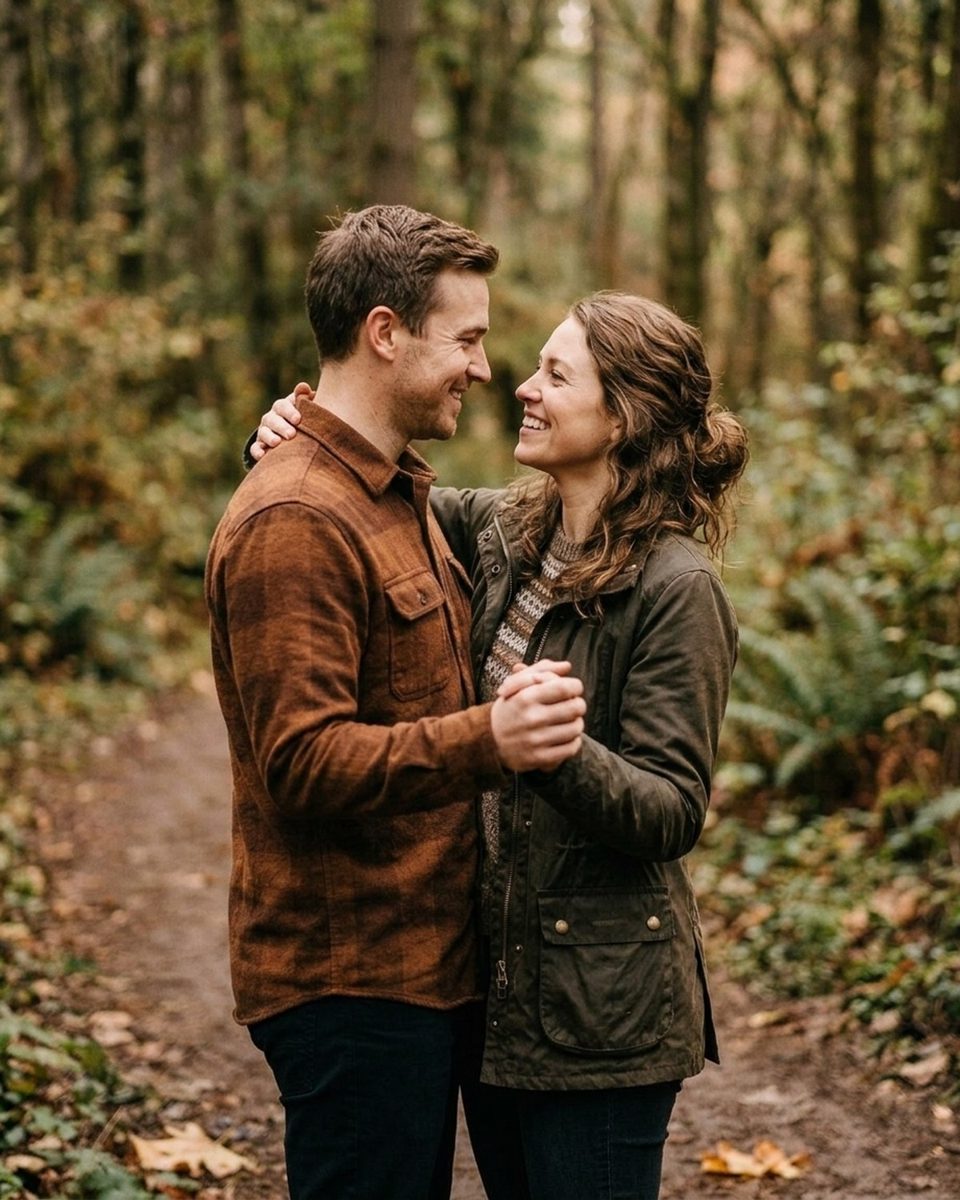
Pull them in by the waist like you've done it a thousand times.
RomanticFrom the pose “Blanket wrap”
The best opening line in the catalog for a long marriage, because the comparison it offers is true. You are not asking for a romantic gesture, you are asking for a familiar one, and the hand lands with the particular confidence of a hand that knows where it is going. Shoot the arrival, not the settled position.
Let your hands find each other without looking down.
CalmFrom the pose “Jacket drape”
Hands are where this session either works or looks staged. Watching their own hands is what makes people look like they are assembling a pose, and the ban on looking is the whole instruction. After thirty years the hands genuinely do find each other, and the two or three seconds of them doing it is usually better than the frame you were setting up.
Nobody's judging your hands. Wherever they land is right.
Nervous clientFrom the pose “Slow dance field”
Keep this one for the partner who keeps resetting — fingers in, fingers out, hand on the waist then off it again. Fidgeting of that kind is self-consciousness, not indecision, and naming it as fine is quicker than correcting it. Say it once and look back at your camera rather than at their hands.
Ask for the story, not the feeling
Prompts that name an emotion fail here. Look at them like you love them asks a sixty-year-old to perform something in front of a stranger in a park, and what you get is a held smile that reads as politeness. A question works instead, because it has an answer and they can tell when they have given it. The expression you want arrives sideways, while they are busy with something else.
Pick questions that only these two can answer. Thirty years is a lot of material, and the good frames come from the retellings they have done so many times that the telling itself is a routine: one of them starts, the other corrects a detail, both of them laugh at the correction.
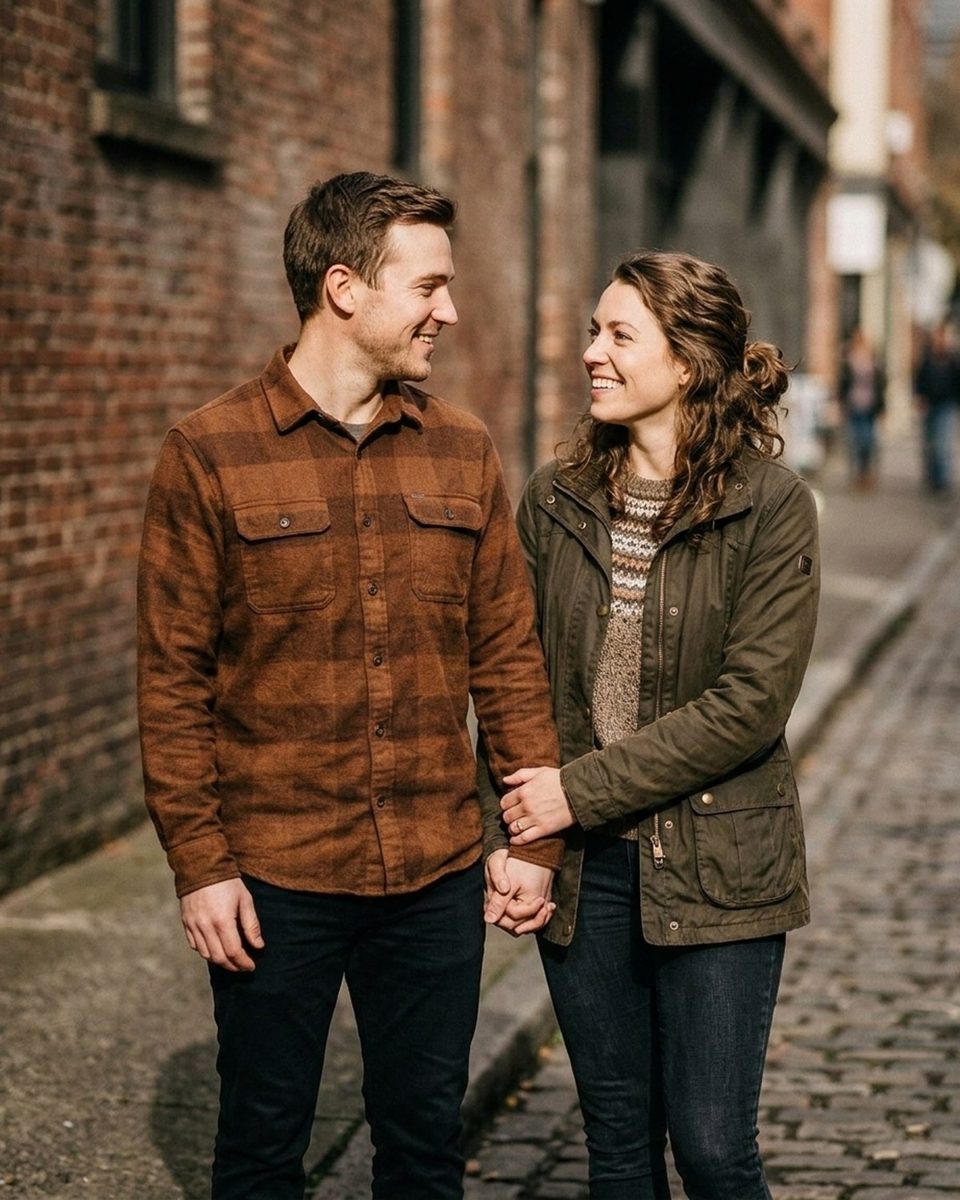
Forget I'm here for a second. Tell them about the first time you met.
Nervous clientFrom the pose “Wall lean”
The most reliable line in the guide, and it gets better with the length of the marriage. They have told this story at every anniversary dinner for three decades, so it comes out polished and they both know their parts. Expect the first twenty seconds to be unusable and the next minute to carry the set.
Tell them the exact moment you knew.
RomanticFrom the pose “Bench snuggle”
Ask it of one of them by name and let the other listen. The listening face is the one you are really after, because nobody arranges their face while they are being told something they have not heard put quite that way before. Stay quiet afterwards; the answer usually arrives late.
Tell them your worst joke. The one they've heard a hundred times.
PlayfulFrom the pose “Interlocked hands detail urban”
For the couple whose affection lives in their sense of humour rather than their hands, which after thirty years is most of them. You want the eye-roll and the laugh underneath it. The joke is genuinely bad, both of them know it, and the exchange is the most accurate thing you will photograph all hour.
Show me the face you make when they take too long to get ready.
PlayfulFrom the pose “Whispered secret”
A shared complaint is a kind of intimacy and this one is universally owned. The face is specific, well rehearsed, and funny to exactly one other person, who is standing right there. Keep shooting through the protest that follows it, which is where the laugh is.
Sit them down earlier than you think
Standing for an hour is work, and it is work that shows in the face before anyone mentions it. Get them seated by the twenty-minute mark, not as a concession but because seated poses are better for this couple: shoulders drop, the height difference stops being a problem to solve, and both sets of hands have somewhere to rest. A bench, a low wall, a step. Shoot at their seated eye level rather than down at them, which is the difference between a portrait and a photograph of two people on a bench.
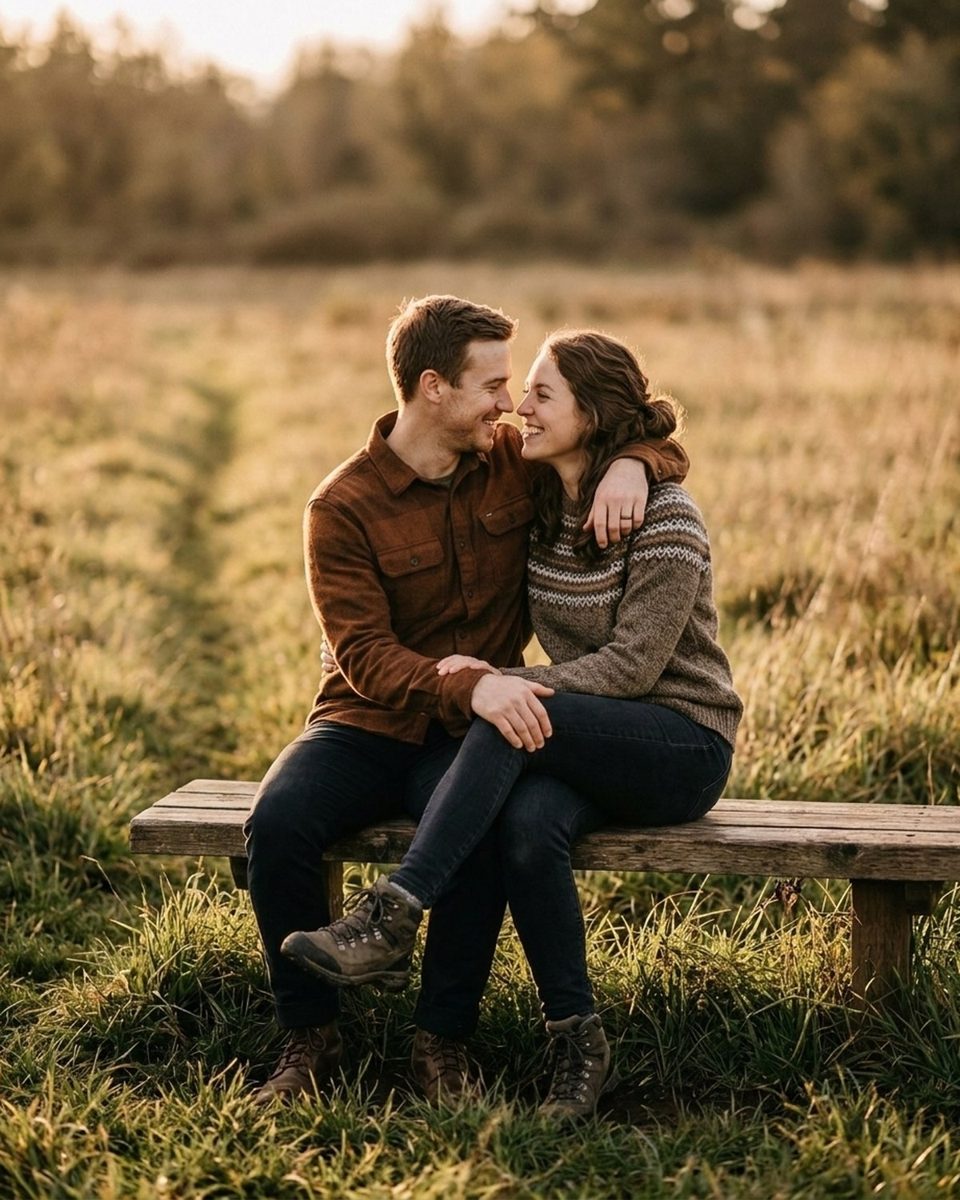
We can take this as slow as you want. Start by just holding hands.
Nervous clientFrom the pose “Look back over shoulder home”
Say it at the moment you move from standing to seated, or from no contact to some. It concedes the pace to them and names a first step that is finite, which matters to a couple who are privately wondering whether you are going to ask them to kiss in a public park.
Soften your jaw. Now soften it again.
CalmFrom the pose “Bench snuggle”
The held smile is the main technical problem in this kind of session, and the jaw is where it lives. Asking twice is the trick: the first softening is cosmetic, the second one is real. Shoot immediately after the second, before the smile is rebuilt.
Rest there. There's no clock today.
CalmFrom the pose “Umbrella share home”
Say it and then stop talking. Much of a session's tension is pace, and a couple waiting for the next instruction will drop their shoulders the moment it is clear none is coming. It also quietly gives permission to anyone who is tired and has not said so.
Movement, without asking anyone to run
You still want motion, because motion is what stops a gallery looking like a set of arrangements. You do not want the running, lifting and spinning prompts, which are built for people in their twenties and which a sixty-five-year-old will attempt anyway if you ask, with results nobody enjoys. Everything you need is available at walking pace: a slow walk toward the camera, a sway in place, a shared breath before the first step.
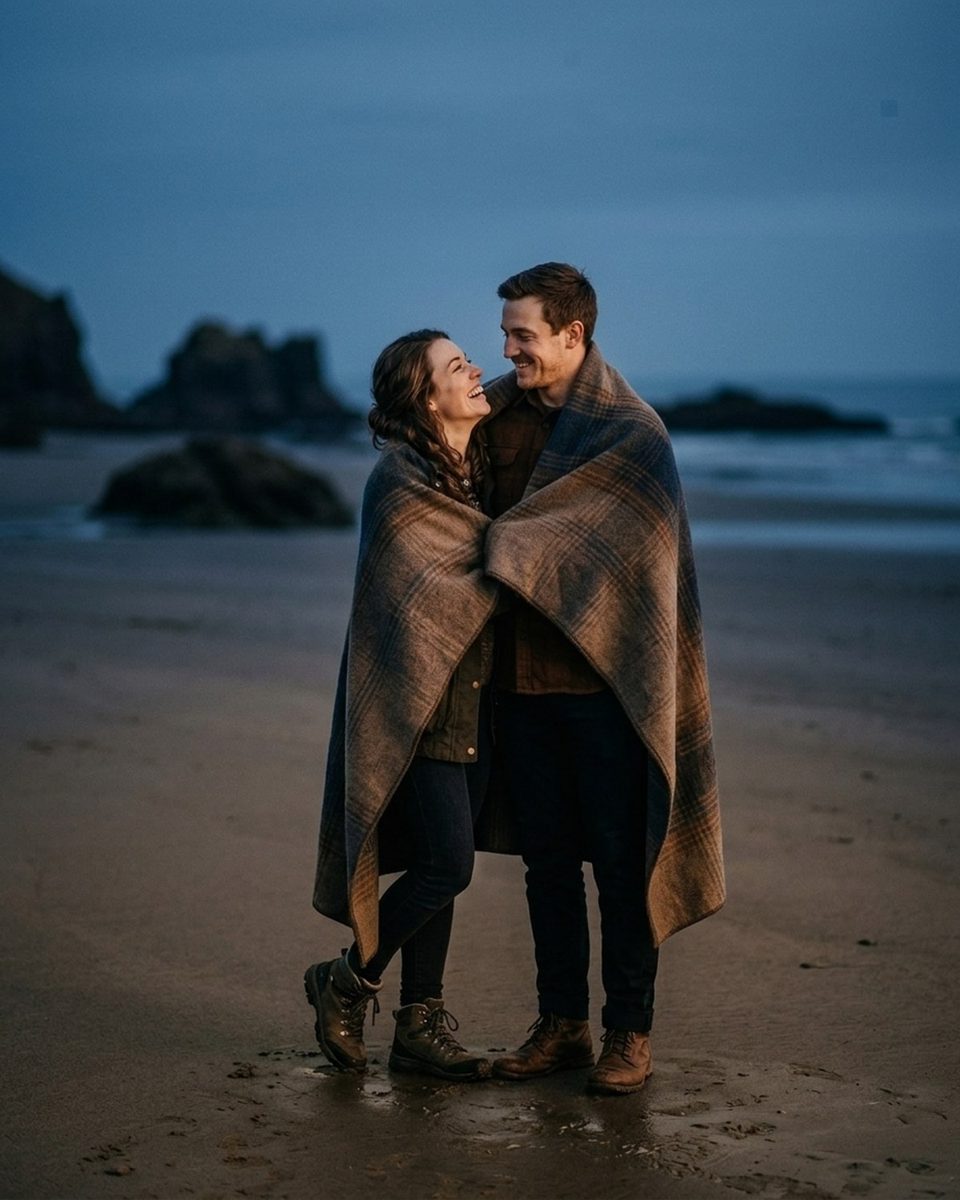
Breathe in together — and let it out slow.
CalmFrom the pose “Arm swing stroll forest”
Said just before they start walking. A shared breath synchronises the stride, and synchronised strides are what make two people walking side by side read as a couple rather than two people going the same way. It drops the shoulders about an inch as a by-product.
Hold each other and sway, barely. Less than that. Perfect.
CalmFrom the pose “Campfire cuddle”
The correction built into the line is what makes it work. Everyone oversways on the first attempt, the less than that brings it down to the amount that photographs well, and the perfect arrives before they have time to feel foolish. Keep the shutter going through all three parts.
Slow dance. No music. You know the song.
RomanticFrom the pose “Walking hand in hand”
For a couple this far in, the last clause is literal: there is a song, and they will both think of it. Do not ask what it is before the frames. Ask afterwards, and write it down, because it is the kind of detail that belongs in the gallery note you send with the delivery.
Swing your arms like you're twelve and just started dating.
PlayfulFrom the pose “Umbrella share home”
Use this one once, late, when you have the safe frames already. It is deliberately silly and it works because the instruction is specific about the age, which gives them a character to play rather than a feeling to produce. The recovery afterwards, when both of them are laughing at themselves, is the frame.
The last ten minutes
By this point you have what the gallery needs, and the temptation is to spend the goodwill on the dramatic frame you have been saving. For most anniversary couples that is the wrong trade. What you have earned is stillness without self-consciousness, which is harder to get and better to own. Put them somewhere they can lean, say very little, and shoot slowly.
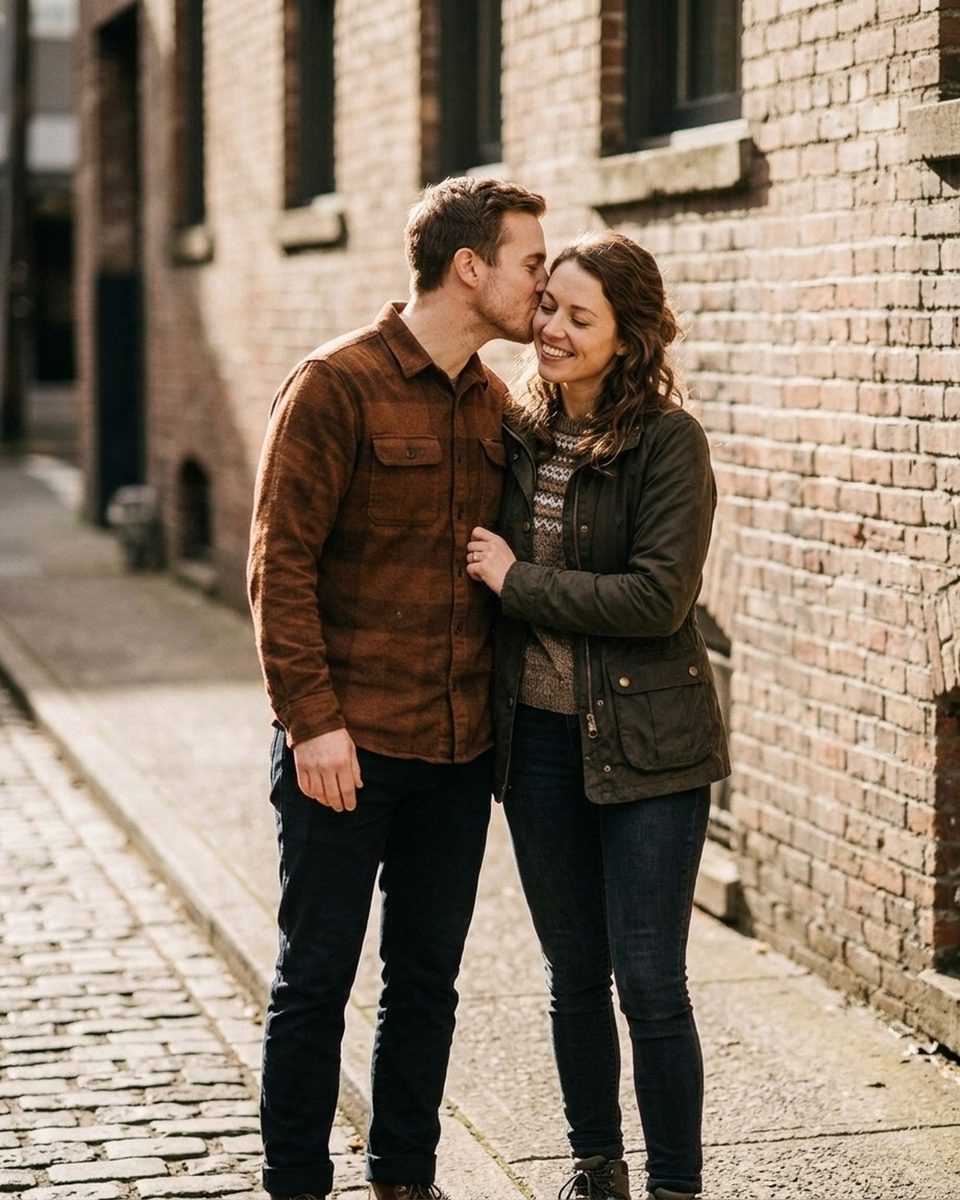
Come in for the kiss — but stop one inch short and stay there.
RomanticFrom the pose “Temple kiss urban”
The version of the kiss frame that works for people who do not kiss in public. The stopping is the instruction, so nobody has to decide how much to perform, and the held inch produces the expression that the kiss itself would have hidden. If they close the gap on their own, keep shooting and say nothing.
Rest your head on their chest and close your eyes.
CalmFrom the pose “Interlocked hands detail urban”
Closed eyes solve the two problems that show up in portraits of people in their sixties: the squint in bright light, and the strain of holding an expression for a lens. It also gives the taller partner something to do with their chin. Give it a full ten seconds before the first shutter.
Stand still together and listen to the wind for a second.
CalmFrom the pose “Hand kiss”
The last frame of the day. It points their attention at something outside the two of them and outside you, which is the one arrangement in which almost anybody forgets a camera is present. Then stop, lower the camera where they can see you lower it, and tell them you have it.
What to leave off the list
Build the shot list in advance and leave off the lift and spin, the piggyback, the run and catch, and the dip kiss. Not because they are bad poses — they are good ones for the sessions they were designed for — but because a couple will attempt what their photographer suggests, and an unasked question costs nothing while a declined one sits in the room afterwards. Swap each for the version that works standing still: a sway for the spin, a slow walk for the run, a one-inch pause for the dip.
Then tell them what they have. Couples who have not been photographed in thirty years often assume the session will show them how much they have aged, and what it actually shows is two people who are entirely comfortable standing next to each other, which is not something a couple of two years can fake. Saying that out loud at the end is the part most photographers skip. If one of them froze rather than relaxed, what to say when a couple goes stiff covers the recovery, and posing a couple who aren't touchy covers the pair who ruled out contact in the questionnaire.
The Fall Mini Session Shot List
About 25 poses grouped by family size, each with the words to say. A free PDF, sent once you confirm your address.
One email to confirm, one with the PDF. Unsubscribe any time. No selling, no sharing.

Every prompt in this guide is in the app, with the pose it belongs to.
Prompted is the posing app that is only a posing app: 259 poses, each with word-for-word prompts in four tones, filtered to the light you're standing in. The sun tracker is free forever.
Get Prompted on the App Store